Lilah's Best Books Of 2025
It's a new year, which means it's time to reflect on all the art I enjoyed through the swirling vortex of despair that distressingly characterized so much of last year! I read a lot in 2025, albeit less than in previous years, partly because this was the year I decided to tackle some very large books. So without further ado, join me as I recount the best books I read (for the first time) in 2025!
The Brothers Karamazov by Fyodor Dostoevsky

Somehow, without intending to, I both began and ended 2025 reading giant monolithic novels that grapple with the spirits of their respective centuries. The Brothers Karamazov is some brilliant combination of murder mystery, family drama and courtroom thriller but it is above all else a 900+ page philosophical novel of 19th century existential and spiritual despair, a canvas for Dostoevsky to think really hard via the medium of some of the sweatiest men to ever grace the page. After my read-through of Crime and Punishment I thought I knew how sweaty a guy could be, but Raskolnikov has nothing on Mitya Karamazov, whose perpetual dampness practically soaks through the page. There is a delirious quality to Dostoevsky's prose that captures the desperate, feverish ranting of these characters as they search for some kind of meaning and spiritual truth. He also invents the video game nearly a century early via a couple-hundred page section where Alyosha criss-cross the village of Skotoprigonyevsk performing fetch quests and talking to every NPC. Many call this the Great Novel and yeah, I can see it.
Beloved by Toni Morrison
My first Toni Morrison, the kind of book that hits you like a truck and reminds you how good a novel can be. Toni Morrison's prose is full of clarity and empathy and beauty as she uses the ghost story to grapple with motherhood and the lasting psychological wounds of slavery. This book unequivocally deserved its Pulitzer win. I'm excited to read more Morrison - I also read Song of Solomon this year and loved it!
Pride and Prejudice by Jane Austen
Funny and witty and affecting and oh so perfect. I expected to like this, but I didn't realize just how compulsively readable it was going to be, how much I'd love the characters, how relatable I'd find the family dynamics.
The Lord of the Rings by J.R.R. Tolkien
It's Lord of the Rings! It's great! I liked it so much I read all three volumes back to back! I read half of this as a kid and spent much of my life with the perception that Tolkien is a stuffy and boring author which is extremely untrue. His world is imbued with such a sense of history and myth, his Hobbit characters with such a quiet heroism. I loved seeing all the wonderful moments cut from the films, the much stronger gay subtext between Sam and Frodo, the long journey home at the end. I hated how badly the book handles basically anything with Eowyn.
I also tackled The Silmarillion this year and um. Yeah that's a book I read.
Tehanu by Ursula K. Le Guin

I love the original Earthsea trilogy. This year, I read Ursula K. Le Guin's years-later return to that world, and I found a profound work of literary reflection, revision and self-critique. To quote my Goodreads review:
A step forward not just for Earthsea but for fantasy literature as a whole. Gone are the great deeds and grand adventures, replaced with subversive domesticity and moving meditations on womanhood, motherhood, aging, trauma and healing. A book of quiet, ordinary pain but also quiet, ordinary beauty. It’s maybe Le Guin’s masterpiece
Gravity's Rainbow by Thomas Pynchon
This October saw the release of Shadow Ticket the newest and likely final novel by the inimitable Thomas Pynchon. While many critics dismissed it, seemingly for not being a career-encompassing late-period masterwork, I hugely enjoyed it as a comic novel capturing the desperation of trying to hold on through a historical moment hurtling towards the abyss of fascism. It was my third Pynchon (after The Crying of Lot 49 and Mason & Dixon), and it finally converted me from a casual Pynchon-liker to a full-on Pynchon sicko.
So, in November I decided to finally sit down and tackle Pynchon's all-encompassing mega-novel of the 20th century, Gravity's Rainbow. And reader, what a novel it is. I already wrote about it in a Goodreads review, so I'll just quote that here:
This holds a special place in the culture as one of the great monolithic and impenetrable classics of 20th century American lit, and while its difficulty is perhaps a little overstated its complexity and its merits certainly aren’t. Pynchon unites history and science and slapstick and atrocity and paranoia into an encyclopedic novel that captures no less than the arc and the horrors of the 20th century itself, all told via searing, overwhelming prose that positions Pynchon as a true inheritor of the modernist tradition. Its portrayal of humanity’s compulsive erotic search for self-annihilation, our fetishization and worship of technology, the brutal old forms of control (religion, colonialism) falling away to nefarious new ones (the corporatization of the nation state), the ritual sacrifice of the young so the old can shape society in their own image and maintain their grip on power have only become more relevant in the last five decades, not less. It’s Pynchon’s world and we are, distressingly, all just living in it
Honorable Mention (because I've read it before): Wuthering Heights by Emily Brontë
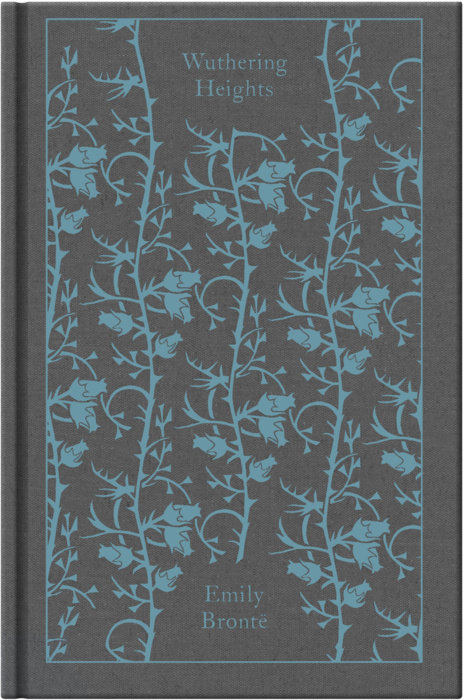
This year I reread Wuthering Heights, my favorite novel, and was pleased to reaffirm its status in my heart. It's an incredible and still-transgressive novel about the proximity of love and suffering, intergenerational abuse, the withering effects of trauma on the human soul, and the violent boundaries drawn by "respectable" society, all steeped in an intense emotionality that pushes the novel into its own heightened reality. This book has teeth that have prevented the culture from fully absorbing it in the way of other classic novels. I love it dearly.